

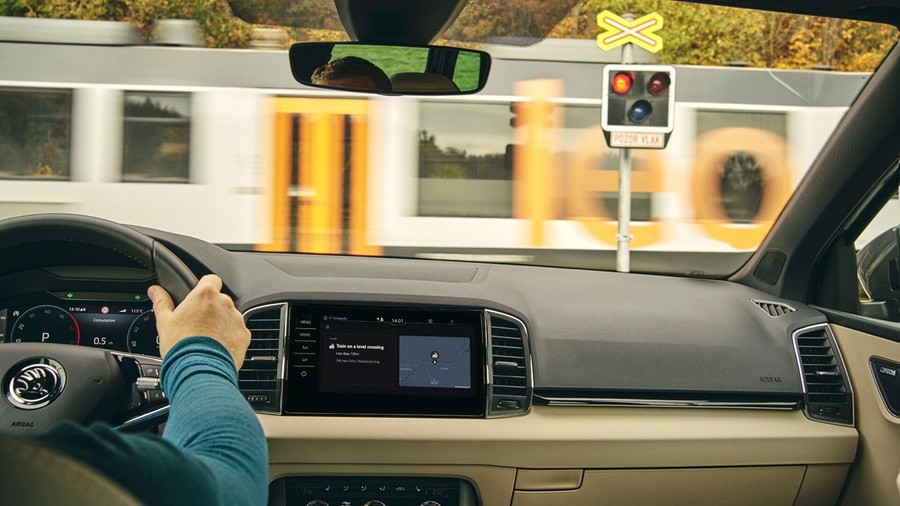
A learner may spend weeks practicing turns, parking, lane changes, and intersections before coming across a railroad crossing during a lesson. Then one appears ahead, and suddenly there are tracks, signs, flashing lights, or vehicles slowing in front.
Railroad crossings deserve their own attention because they are not simply another intersection. A driver needs to notice the crossing early, understand the warnings present, and avoid making decisions that could leave the vehicle in the wrong place.
Spot the Crossing Before You Reach It
The easiest time to prepare is while there is still plenty of road ahead. Signs, and pavement markings can warn drivers that tracks are coming up.
A learner who notices these clues early has time to observe the crossing and surrounding traffic. Someone who notices them late may become focused on braking rather than understanding the whole situation.
Looking farther ahead makes a real difference here.
Never Follow Traffic Onto the Tracks Blindly
Traffic ahead begins moving, so you move too. Normally, following the flow may feel natural. At railroad tracks, however, the space beyond the crossing matters.
Before you go, check that there’s adequate space on the other side for your vehicle. Moving forward without available space could leave the car in an unsafe position if traffic stops.
The vehicle ahead clearing the tracks does not automatically mean there is room for you.
Practical Lessons Build Better Observation
Railroad crossings are a good example of why learners need to look beyond the nearest car. Signals, signs, barriers, tracks, and traffic beyond the crossing may all provide information.
Through a driving school richmond tx, learners can work on observation and decision-making during practical driving. Real-road experience helps students become more comfortable gathering several pieces of information without letting one detail consume all their attention.
Treat Warning Devices Seriously
Flashing lights and lowered gates are not inconveniences to work around. Learners should understand the applicable rules and follow the warnings provided at the crossing.
Do not make a decision based on what another driver attempts. Someone else taking a risk does not make the same action appropriate for you. Keep your attention on the crossing and the information being given.
Avoid Getting Distracted by the Train
Once a train is passing, it naturally attracts attention. A learner may watch it and stop noticing the vehicles or pedestrians nearby.
Stay aware of the full surroundings. Traffic may be waiting in several directions, and conditions can change while the crossing remains closed. When movement becomes possible again, reassess rather than simply following the first car immediately.
Learn the Rules Before Meeting the Situation
A live railroad crossing is not the ideal place to wonder what a sign means or what a driver is required to do.
An online drivers ed texas option allows learners to study road rules and driving responsibilities away from moving traffic. That background knowledge gives them something familiar to draw on when the same signs or situations appear during a real drive.
Be Patient When Traffic Starts Moving Again
After a train passes, drivers may be eager to continue. That can create another moment of pressure for someone who is learning.
There is no need to rush because the vehicles behind are ready to move. Check that the crossing is clear and that there is suitable space beyond it before proceeding. A few seconds of patience are hardly going to change the journey.
Make the First Experience Useful
If a learner encounters a railroad crossing during practice, talk about it afterward. Ask what they noticed first and whether anything was confusing.
A short conversation can reveal whether they understood the signs and looked beyond the tracks. The next crossing will then feel less unfamiliar.
Conclusion
Railroad crossings may appear only occasionally on a learner’s usual routes, but that makes understanding them beforehand even more worthwhile. There may not be many opportunities to learn through repetition.
Good preparation is fairly simple: know the relevant rules, notice warnings early, and never move onto the tracks merely because the vehicle ahead has done so. Driver education and practical learning services available through myfirstdrive.net can support Texas learners in building that broader awareness, so an unfamiliar crossing becomes another road situation to handle thoughtfully rather than a reason to panic.